Field guide / 04
Progression is a learning process
Paragliding training is not a single event. It develops judgment and practical skills over time, with instruction adjusted to the learner, equipment, terrain and conditions. A school or qualified instructor should explain what each stage is intended to teach and what evidence they expect before a learner moves on.
Training systems and terminology differ by country and organization. Ask how a program fits local requirements, what records or assessments it uses and what additional practice is normally needed. Do not assume a certificate, course title or number of sessions has the same meaning everywhere.
Ground handling and equipment familiarity
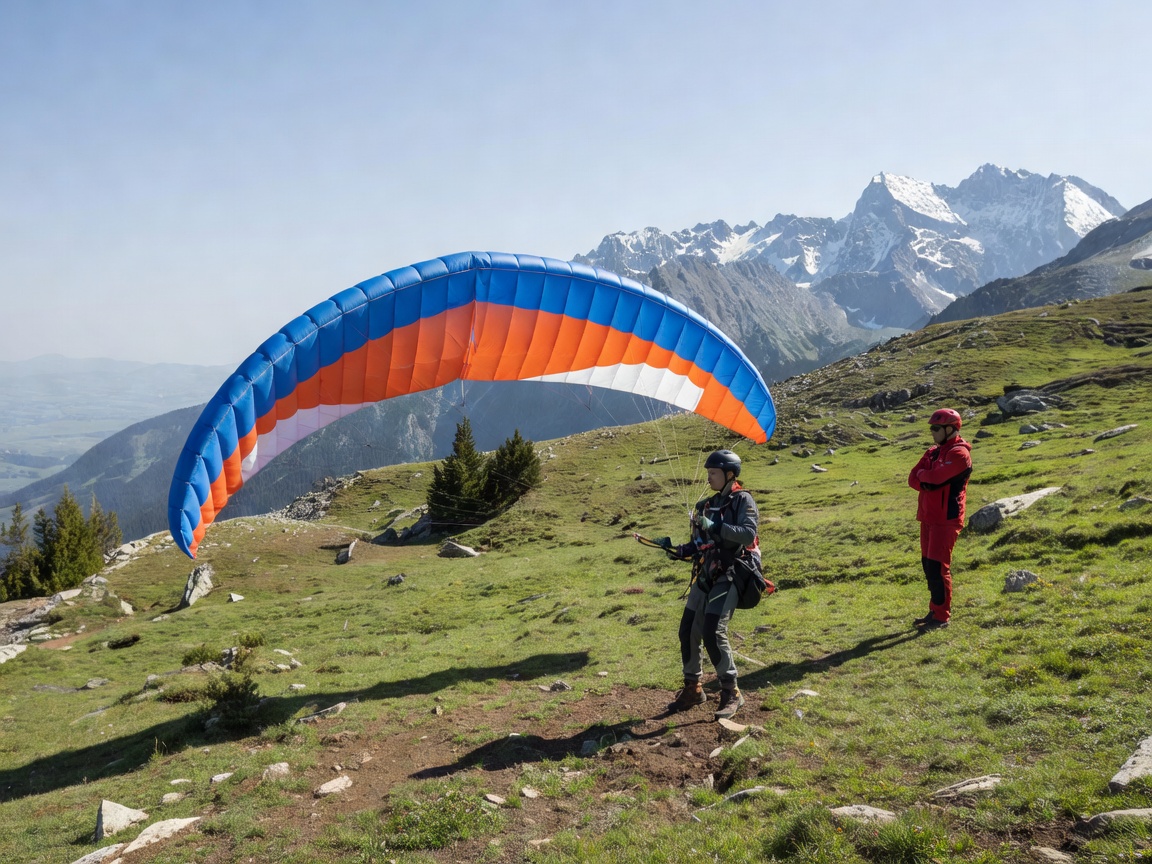
Ground handling introduces how a wing responds to input while the learner remains on the ground. It can develop awareness of canopy movement, control and the influence of changing wind. Practice should take place in a suitable area under instruction. The exercise is not a casual activity to copy from a video or try alone on a slope.
Equipment familiarization begins with the specific gear used in training. Learn its components, fit, inspection expectations and care through instructor guidance and manufacturer information. Ask how the school matches equipment to a student and what to do if something is unfamiliar or appears damaged. Do not modify or substitute safety equipment without qualified advice.
Launch awareness and landing concepts
Launch awareness includes understanding the training environment, listening to the instructor, communicating clearly and recognizing when a planned exercise should stop. This page does not provide launch instructions. Launching requires a practical lesson, a qualified instructor, appropriate conditions and established procedures.
Landing education also develops progressively. Instructors explain the concepts, site-specific considerations and practice appropriate to the learner’s stage. Terrain and local procedures vary. Ask how landing areas are selected during training and how students learn to recognize alternatives. A description on a webpage cannot teach the judgment required for a real flight.
Weather interpretation and decision-making
Weather awareness means learning to use appropriate forecasts and observations, understand uncertainty and discuss what conditions mean for a particular site and pilot. Mountains create local effects that broad forecasts may not resolve. Training should connect weather concepts to instructor-led decisions rather than present a universal threshold as safe for everyone.
Ask how the school handles a forecast that changes, how students are briefed and how cancellation decisions are communicated. A canceled session can be an important demonstration of risk management. Students should be able to raise concerns without pressure to continue.
Flight planning and communication
Planning includes understanding the site, access, airspace information, local restrictions, landing options and the day’s objectives. It also includes considering how a group stays in contact and what happens if plans change. Training should introduce these topics at a level appropriate to the student and use current local procedures.
Radio communication may form part of a course, depending on the location and training organization. Ask what equipment is used, who supplies it and how students learn the relevant protocol. Radio use does not replace visual awareness, instruction or established emergency procedures.
Supervised practice and skill development
Supervision helps instructors provide timely feedback and adapt the lesson. Ask how students are monitored, how instructor and student communicate, and what support remains available between course stages. A program should give learners room to repeat a skill, ask for clarification or stop when uncertain.
Progress is individual. Fatigue, stress, weather and time away can affect readiness. Refresher training can help pilots revisit equipment, procedures or site-specific knowledge after a break, before a new trip or when an instructor recommends it. Returning to practice is a responsible choice, not a setback.
Choosing a training plan
- Confirm the instructor-led stages and expected learning outcomes.
- Ask how weather pauses and additional practice are handled.
- Check the equipment, site and communication arrangements.
- Discuss the local training framework and any prerequisites.
- Ask what ongoing support or refresher options are available.
Good for
New learners seeking a structured introduction and pilots who want to organize refresher coaching or develop skills within a supervised setting.
What to know
This guide is educational only. It is not a course, operational manual or substitute for professional instruction. Follow local rules, your instructor’s guidance, equipment instructions and established safety procedures.