Field guide / 01
Start with the teaching plan
A paragliding school should explain how a beginner moves from ground-based exercises toward supervised flights. Ask for the sequence, expected decision points and the conditions that would pause or change a session. A clear answer matters more than a dramatic location or a compressed timetable.
Course formats differ. Some programs use several training days; others organize instruction in stages over a longer period. Weather, terrain, local rules and student progress can affect the schedule. Confirm what is included, what is conditional and how missed sessions are handled. Do not assume a booking guarantees suitable flying conditions.
Instruction, supervision and local rules
Ask who teaches each part of the program and how supervision works on the ground and in the air. Instructors should explain their relevant qualifications and how these relate to local requirements. Formal credentials, licensing systems and training pathways vary by country and organization, so verify the applicable framework directly with the school and relevant local body.
Supervised practice is not a formality. It gives learners feedback on preparation, canopy handling, decision-making and debriefs while keeping the training within an organized structure. Ask how instructors communicate with students, how a session is stopped, and how the school accounts for changing conditions. Avoid programs that imply experience can be substituted for proper instruction.
Beginner courses and tandem introductions
A tandem flight can provide an introductory experience with a qualified tandem professional, subject to local requirements. It is not a pilot qualification and does not replace a course. Ask how the introduction is arranged, what participation involves, and what medical or practical considerations to discuss in advance.
For a beginner course, ask how ground handling, launch awareness, landing concepts, weather interpretation and flight planning fit together. The aim is not simply time in the air. A sound program teaches students to recognize limits, communicate uncertainty and follow established procedures. Ask whether there are written learning objectives or progress reviews.
Ground handling and launch practice
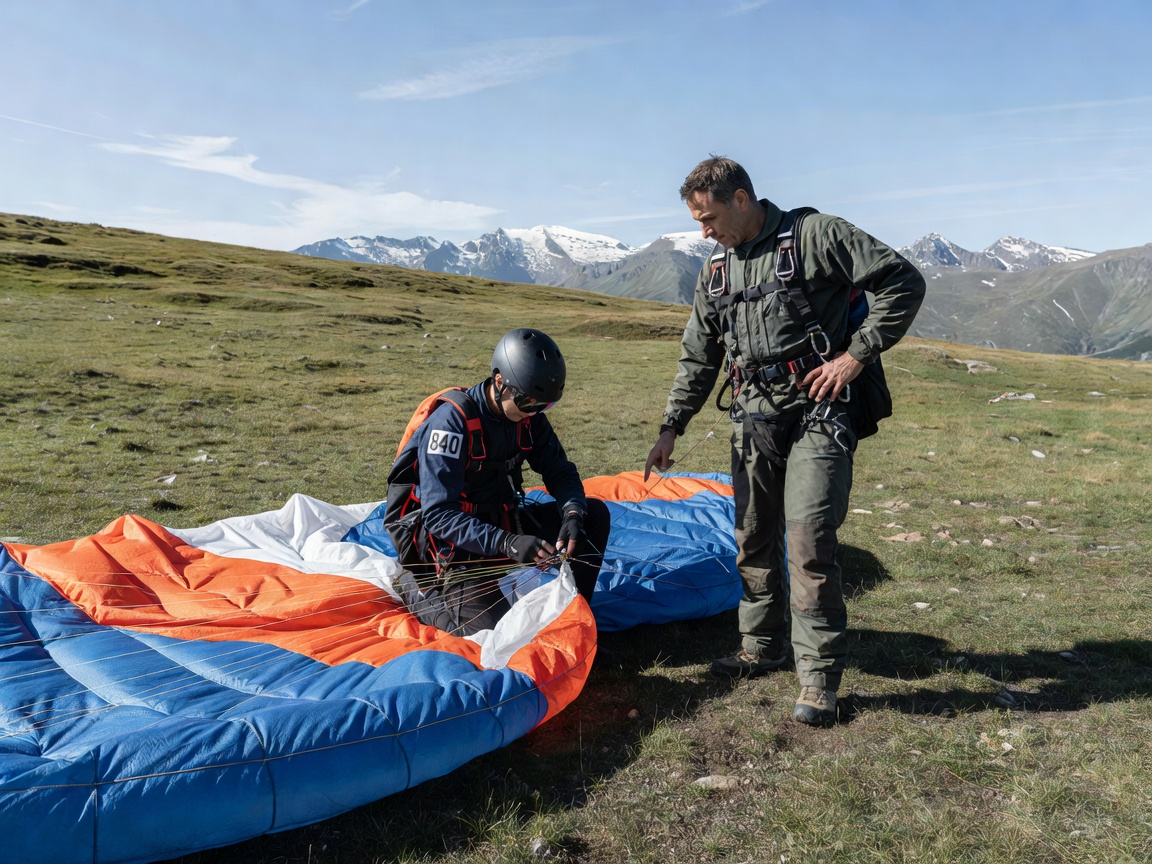
Ground handling introduces wing behavior and control while a learner remains on the ground. The school should choose an appropriate training area and conditions, provide close instruction and explain how practice relates to later flight exercises. Ask how the instructor adapts tasks to ability, wind and terrain. Do not copy exercises from videos or attempt them alone on exposed ground.
Launch practice should be introduced progressively and only under instructor direction. The school should explain the training environment, communication method, supervision and reasons a session may be stopped. A site that looks convenient may not suit a learner on a particular day. Terrain, wind exposure, landing options and access to assistance all matter.
Equipment: what the school supplies
Many schools arrange the equipment needed for initial instruction, but the inventory and terms vary. Ask what wing, harness, reserve, helmet, radio and other items are supplied, how they are selected for a student, and who checks them. Ask about fit, maintenance processes and what clothing or footwear you should bring. Do not assume a school’s equipment is interchangeable with equipment you may later own.
Delay buying personal flying equipment until an instructor has discussed your training stage, fit, intended use and local requirements. A school can explain the trade-offs without steering you toward an unsuitable purchase. Confirm whether personal equipment is accepted in training and what inspection or documentation is required.
How to compare programs
Compare the same practical points across several providers. Look at teaching structure, instructor access, student-to-instructor arrangements, weather flexibility, site choice, equipment provision, communication and progression after an introductory course. Ask what happens when a learner needs more practice. A responsible program should make room for individual pace rather than promise identical outcomes for every student.
Training environments differ. A school may use low-angle practice areas, established launch sites or several locations as skills develop. Ask how site selection changes with the lesson and who gives the local briefing. A scenic setting is not a substitute for a suitable learning environment.
Questions to ask before enrolling
- What are the stages, learning goals and criteria for progressing?
- Who provides instruction, and what supervision is available?
- Which equipment is included, and what should I bring?
- How are weather cancellations, pauses and rescheduling handled?
- What local rules or medical considerations apply?
- What further instruction is recommended after the course?
Good for
People who want a structured introduction, clear instructor support and a realistic view of the time and practice needed to learn. A tandem introduction may suit someone seeking a first experience without starting a pilot course.
What to know
Course names and requirements are not standardized everywhere. Verify the school’s current arrangements, local rules and instructor qualifications directly. This guide is educational, not a recommendation or substitute for formal instruction.